
In exploring Ottawa, whether as a resident or a visitor, the city’s history is something you can’t ignore. Ottawa has a rich heritage to share with every visitor. Ottawa Future presents a closer look at Ottawa’s historic bridges and the stories behind their construction. It’s fascinating to see photos of these bridges from past centuries and compare them to the familiar structures of today.
The First Bridge and Its History
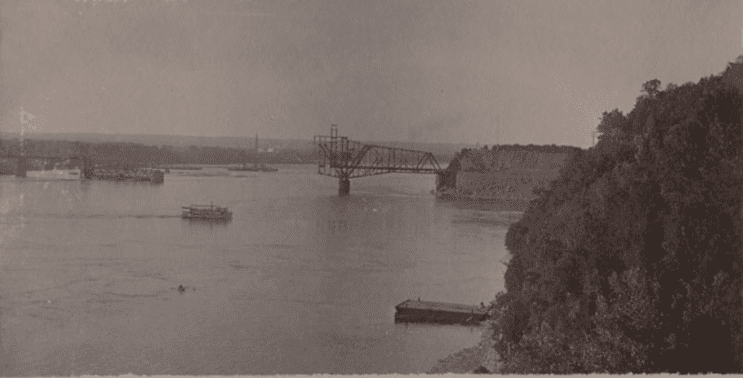
The first half of the 19th century was marked by the presence of only one bridge, which connected the then Bytown with Hull. Built in 1828 near the Chaudière Falls, the wooden “Union” bridge soon collapsed. It was replaced in 1843 by a suspension bridge that served as the main artery connecting Ontario and Quebec. In 1919, the Union Bridge was again replaced by the Chaudière Bridge.
Plaza Bridge
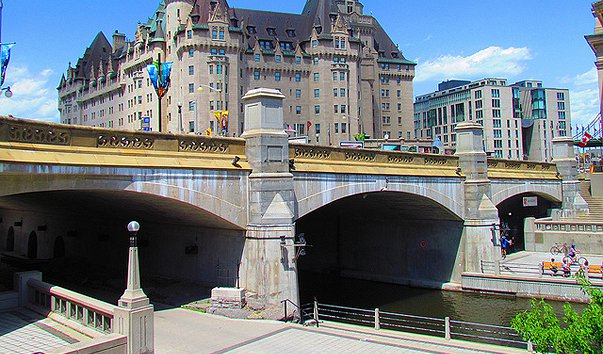
This vehicle and pedestrian bridge comprises three spans:
- The central span crosses the canal area;
- The western span runs along the canal’s western shore;
- The eastern span passes through the former railway tunnel area.
Sappers Bridge and Its History
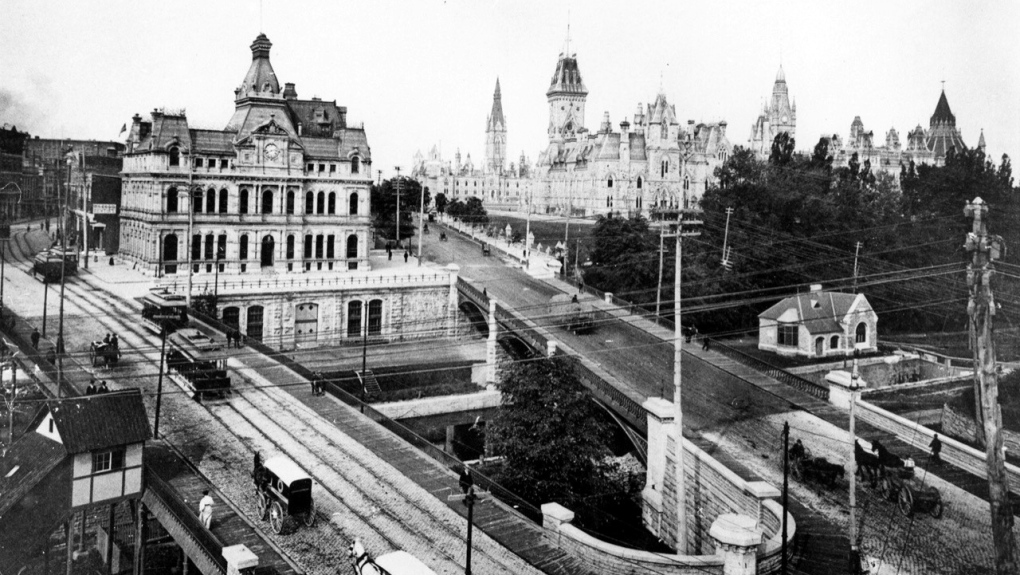
The Sappers Bridge, constructed in 1827 during the Bytown era, was one of Ottawa’s earliest bridges, connecting Lower Town and Upper Town via Rideau Street. In 1912, it was dismantled and replaced by Plaza Bridge.
In the 1870s, the Dufferin Bridge, which connected with Sappers Bridge, formed a triangular configuration. By the end of 1912, construction of the new Plaza Bridge, replacing the former structures, was complete.
Alexandra Bridge
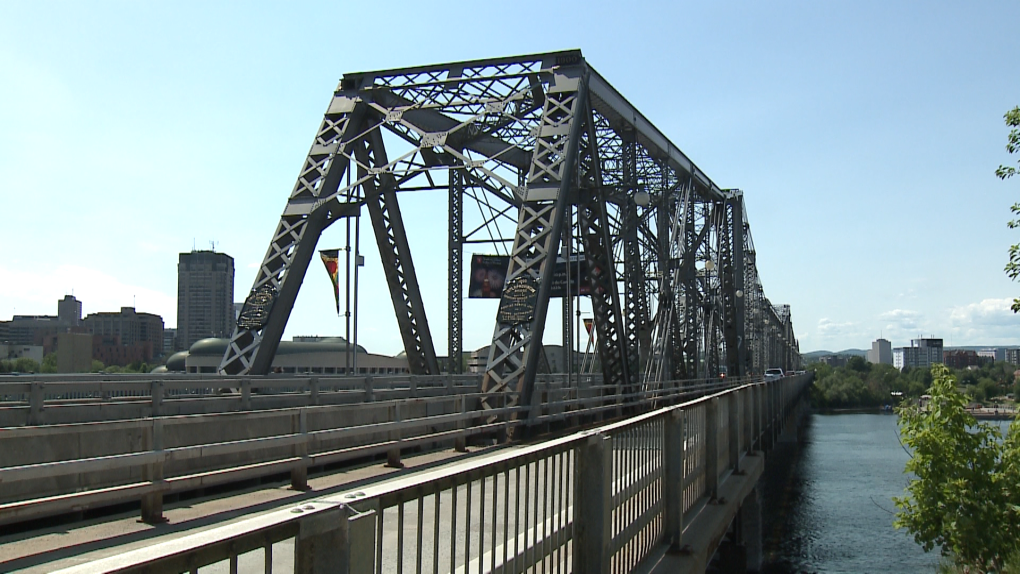
Also known as the Interprovincial Bridge or the Alexandra Royal Bridge, this structure was built in 1880 by the Montreal, Ottawa & Occidental Railway Company. Initially known as the Chaudière Railway Bridge, it was later renamed Prince of Wales Bridge. Located far from Ottawa’s central area, it was not ideally suited for pedestrian or carriage use.
The funding for the bridge was provided by Ottawa ($150,000), Ontario ($50,000), and a federal government subsidy ($112,500). Conditions for its design required it to include two pedestrian paths, two roadways, and tram tracks for Hull’s electric railway.
Within ten months in 1900, Dominion Bridge was completed, and the Quebec Bridge, one of the longest cantilever bridges in the world, was completed in 1916.
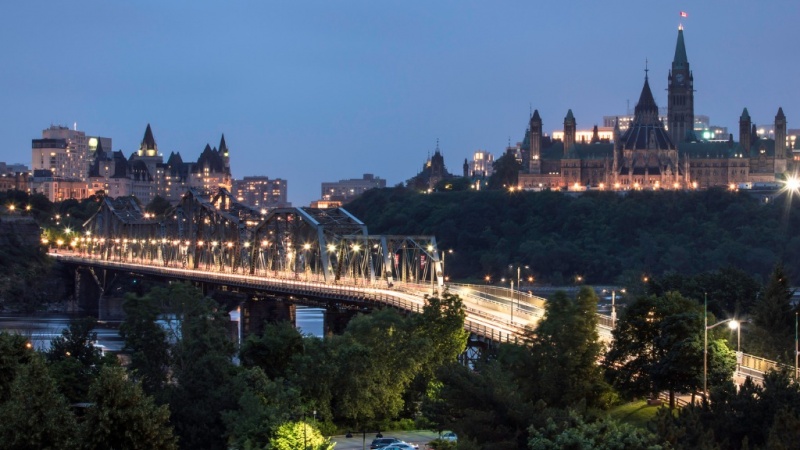
How It Became the Alexandra Royal Bridge
The bridge’s name also has an interesting story. Ottawa’s mayor, W.D. Morris, proposed the name “Alexandra” in 1901, following the visit of Queen Alexandra’s son, who would later become King George V. While “Royal” was not officially sanctioned, the bridge became known as Alexandra Bridge.
After the Hull section was damaged, the national commission acquired the bridge from the CPR. Tracks were replaced with a roadway, converting one roadway for pedestrian and bicycle traffic. Designated as a historic structure in 1995, the Alexandra Bridge celebrated its centennial in 2001 with “Interprovincial 100,” where high-ranking officials, politicians, engineers, and railway workers gathered to mark 100 years of history.
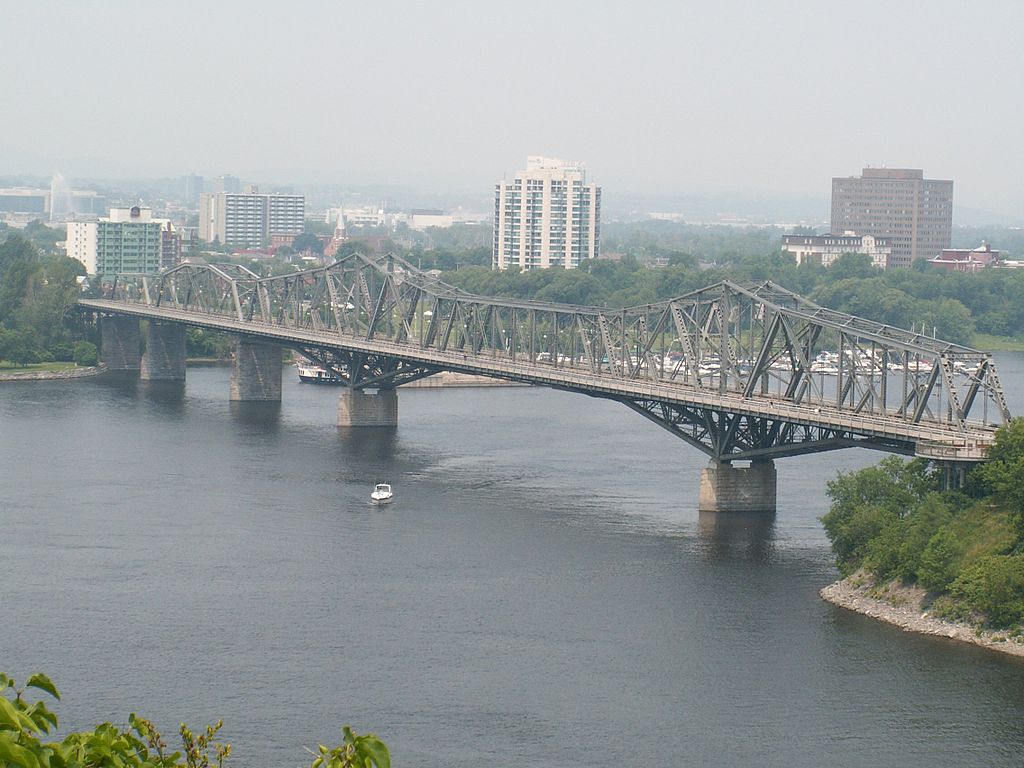
Scenic Views and Historical Significance
From Alexandra Bridge, visitors enjoy views of:
- Parliament Hill;
- The Ottawa River;
- The Canadian Museum of History;
- The Rideau Canal;
- The Nepean Point area.
The bridge is particularly popular for the “Ottawa-Gatineau” pedestrian and cycling route.
Laurier Avenue Bridge
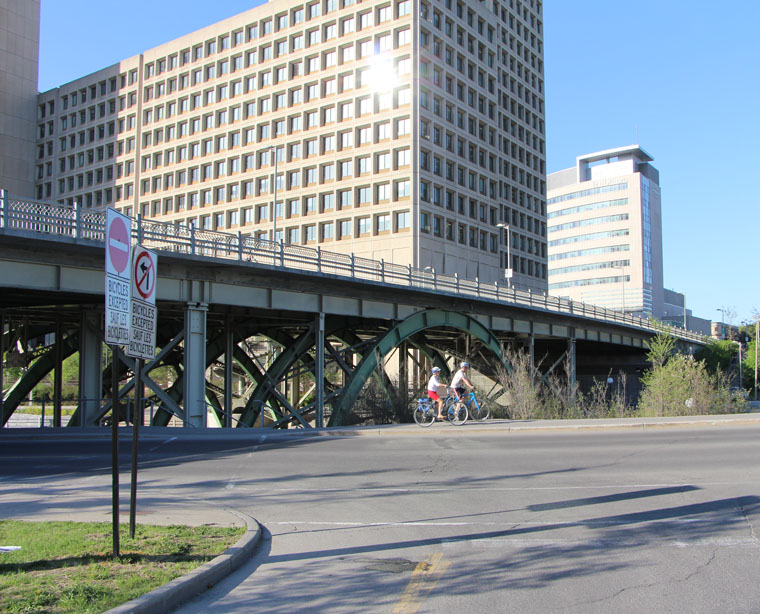
Laurier Avenue Bridge allows travel across Laurier Avenue and the Rideau Canal, marked by green steel arches that make it one of Ottawa’s most recognizable bridges. In 1872, the first bridge was constructed here, expanded to four lanes in 1900 and widened by 50% in 2001.
Major events, like Ottawa’s Winterlude festival, occur near the bridge, decorated with landscaping and connected by stairways.
Corktown Footbridge
Opened on September 21, 2006, this pedestrian bridge spans the Rideau Canal, offering scenic views. Named after Corktown, a community where canal workers, predominantly from Cork, Ireland, lived, the bridge symbolizes the area’s Irish heritage.
Though opened recently, the bridge’s concept emerged in the 1980s. After feasibility studies, it wasn’t approved until 2005, when a $5 million project was finally greenlit. Strong public support marked the bridge’s opening ceremony, led by Ottawa Mayor Larry O’Brien in 2007.
The bridge is a favorite for couples, many of whom secure locks to its railings as symbols of love.
The Significance of Bridges
Bridges rank among the oldest engineering feats of humanity. Early bridges combined stone piers with span structures, later fully built with stone, and eventually with cement, steel, and iron. In the 20th century, reinforced concrete became the preferred material for bridges due to its durability and minimal maintenance requirements.
Ottawa’s bridge history is fascinating, with some structures standing the test of time while others have been replaced. Bridges offer unique views of the city and are popular for strolling, allowing residents to enjoy scenic surroundings and a moment of quiet reflection.