

Residents of Ottawa love to walk, but few people think about the streets we walk along. After whom are they named? What is their history and length?
These streets are filled with ancient stories and events that took place on their grounds. How many people have passed by, and how much has happened over the centuries? Ottawa Future shares insights into the two longest streets in the capital and their histories.
Yonge Street
With a length of 56 kilometers, Yonge Street is one of the longest streets in Ottawa and serves as the city’s main artery. Starting with this street is fitting. Interestingly, until 1999, the Guinness Book of Records listed erroneous information regarding its length, stating it was 1,896 km long, which automatically made it the longest street in the world. Later, this information was corrected.
The construction of Yonge Street holds national historical significance in Canada. Here are a few fascinating facts:
- Yonge Street was part of the western settlement planning in Upper Canada in the 1790s.
- The first Canadian subway is associated with this street.
- It’s a major commercial thoroughfare.
- Along this street are the Eaton Centre and Dundas Square.
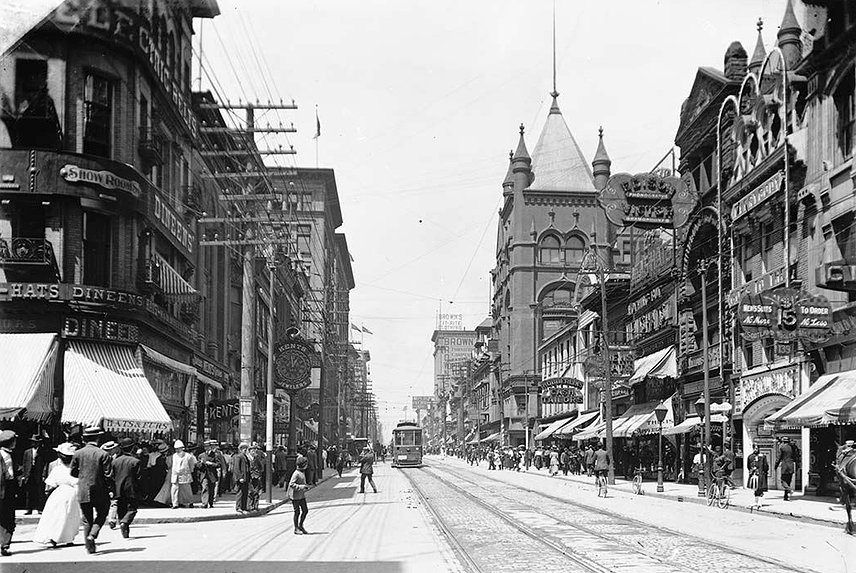
Construction History
The street’s history is filled with adventurous travels, encounters between Indigenous peoples, European settlers, and the exchange of cultures. Historically, it was an Indigenous path, with North American Aboriginals traveling this land.
John Graves Simcoe, the first Governor of York, was instrumental in transforming the dusty, crowded road into Yonge Street. He initiated the road’s construction, allocating land to settlers, who in return had to clear the roadway near their plots.
The street was strategically vital, intended to serve as a reliable route for the British army (running north-south). Over time, Yonge Street has preserved its unique character. Although it no longer holds the title of the world’s longest street, it remains one of the longest in Ottawa.
Bank Street
This is Ottawa’s longest street, stretching over 70 km. It encompasses 15 districts and is well-known as a clean and safe area.
In the 19th century, it was known as Esther Street but was later renamed. Along Bank Street, unique and varied neighborhoods are found, including two business improvement areas (BIAs). It extends southward from Wellington Street, serving as the city’s commercial and shopping hub, also known as Bank Street Promenade. Historically, the street marked the divide between “East” and “West” Ottawa. Since 2006, portions of Bank Street have undergone annual major renovations.
In 1979, standard city signage with reflective white blades was installed on Bank Street, affixed with metal straps and acorn tips.
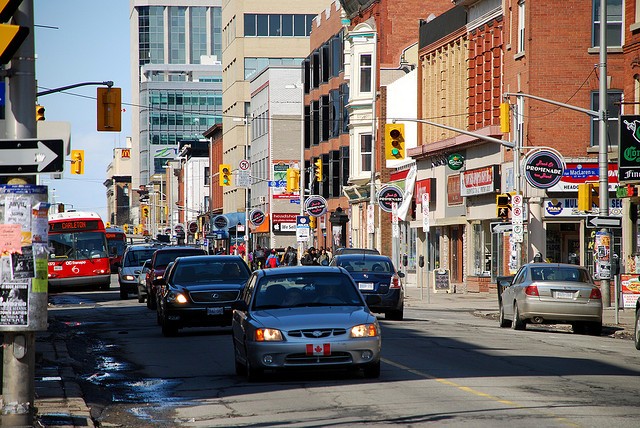
Street Naming
Interestingly, the street was not named after the Bank of Canada, a common misconception. The bank was founded in 1934, but the street’s name dates back to the 19th century. It was named due to its location, running between the banks of the Ottawa and Rideau rivers.
Before the 19th century, the street was widely known as Esther Street, named after the wife of Colonel John By, the notable canal builder.
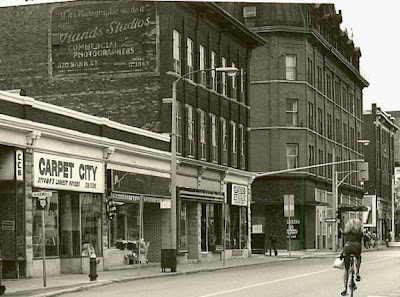
Trans-Canada Highway
Canada’s main highway is also noteworthy. It’s one of the longest highways in the world, stretching 7,821 km. The road crosses all 10 Canadian provinces, connecting major cities and providing access to popular recreational areas, national, and provincial parks.
History
In earlier days, residents primarily relied on water routes, such as the Rideau River, and railways in the 19th century. As demand for roads grew, residents advocated for the connection of cities and provinces. The decision to construct a paved highway, which allowed for faster travel, was ultimately made.
In 1912, calls for interprovincial roads reached the Canadian government, and in 1919, a law was passed for the construction of the Trans-Canada Highway. Thus, residents could cross the Dominion without entering the United States.
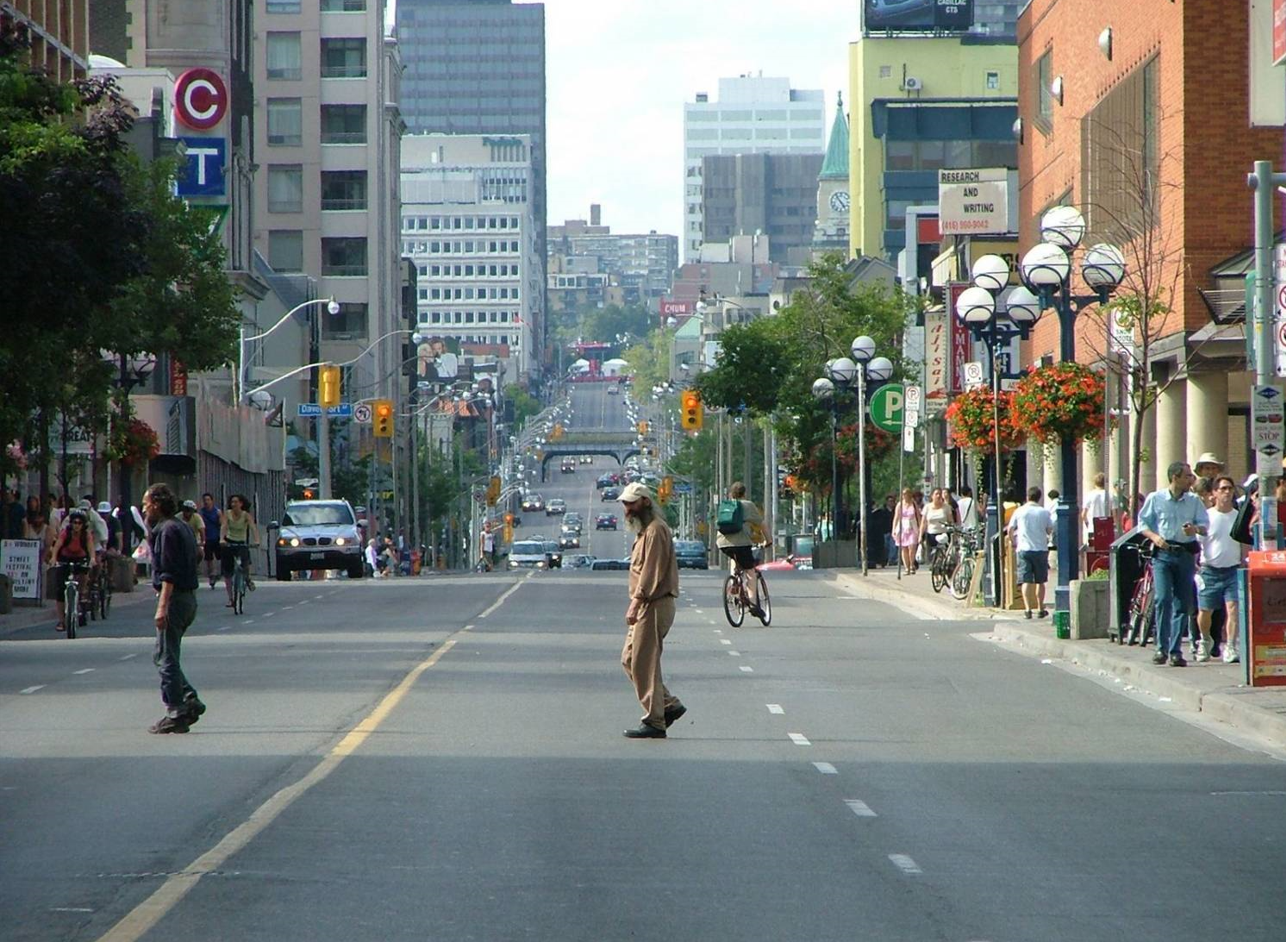
Route
Federal funding covered 90% of the project, with the remainder financed by the provinces. The route began in Victoria, British Columbia, connecting with Vancouver and continuing eastward, passing through Ottawa, Montreal, and Quebec City.
While the construction deadline was set for 1956, negotiations extended the timeline. For example, Quebec only signed on in 1960. Major construction challenges included:
- Sault Ste. Marie and Wawa in Ontario (along Lake Superior), where there were no roads.
- Deep marshlands, requiring the construction of 25 bridges with tons of gravel to create a solid base.
- Rogers Pass in British Columbia, prone to avalanches, with snow reaching an average of 8.5 m. A unique road covering and avalanche control system resolved this issue.
The official opening took place on July 30, 1962, and the road was named “BC Highway 1.” Physical completion came in 1971, when the highway met all standards. Its primary route is the second-longest in the world after Australia’s highway.
Exploring Ottawa
And so, these are Ottawa’s longest streets and the country’s main highway. Some people prefer walks in parks and green spaces, of which Ottawa has plenty, while others choose to explore Canada’s capital more thoroughly.
How to do it? One can select the city’s primary and longest streets, lined with charming establishments, shops, and more. It’s also possible to take a drive along Canada’s main highway, where scenic views are guaranteed.
This is a journey through the city’s history, a time to reflect on the changes over the years and centuries, and to appreciate the progress achieved.