

The Confederation Building is one of the grand architectural icons of Canada’s capital. Like many impressive buildings in Ottawa, it embodies the city’s architectural identity. The Confederation Building is adorned with various ornaments and symbols reflecting Canadian heritage, representing French, English, Scottish, and Irish influences. Among the prominent symbols on the building are the fleur-de-lis, rose, thistle, shamrock, and maple leaf. Further on ottawa-future.com.
Location of the Confederation Building
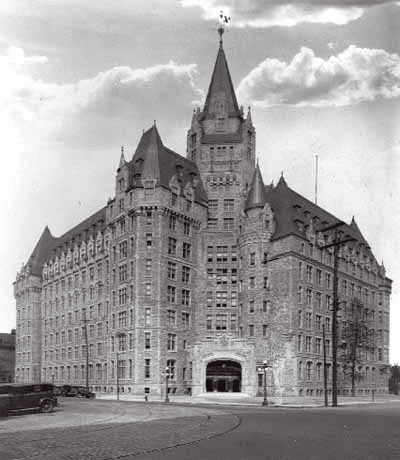
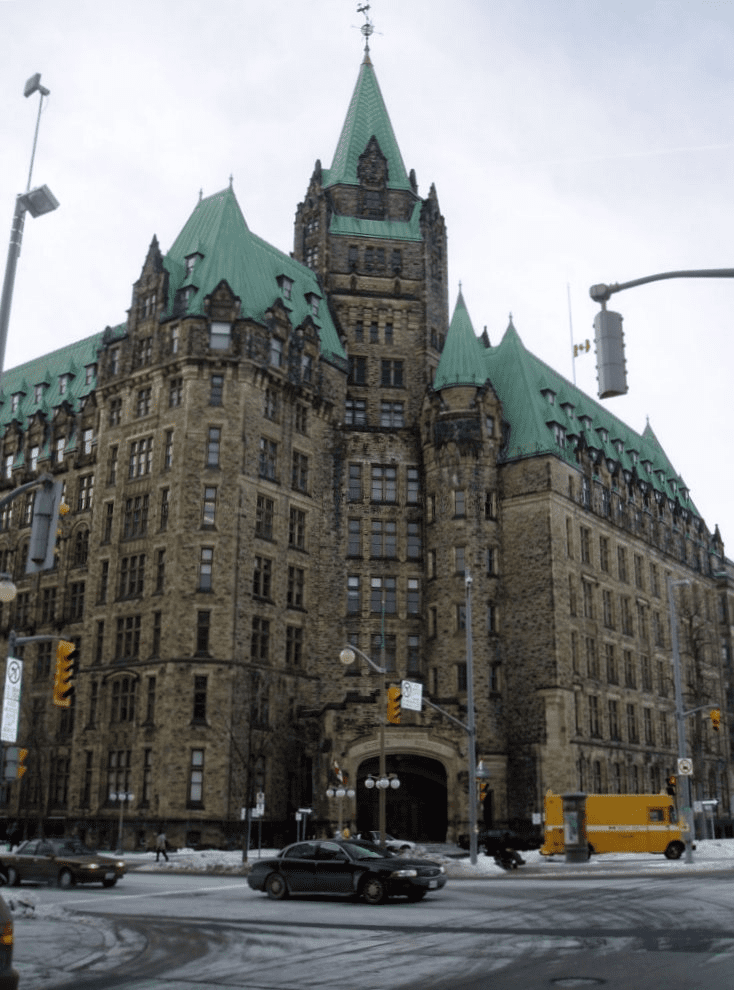
Like many historic landmarks, the Confederation Building is located in central Ottawa on Wellington Street, just west of Parliament Hill. This grand government building is as aesthetically pleasing as it is functional, blending seamlessly with the majestic architecture of other government buildings on Parliament Hill. The Confederation Building’s exterior resembles a castle, often mistaken by tourists for the Château Laurier Hotel.
The building is V-shaped, with two main wings adjoining the main entrance, which features a large tower. The entire structure is clad in rustic stonework, and its copper roof is complemented by numerous dormer windows and small turrets, adding to its castle-like appearance. The main entrance opens onto a spacious plaza.
Canadian Architectural Style
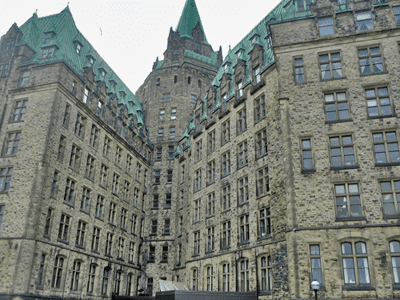
Constructed between 1927 and 1931, the Confederation Building replaced residential homes and small shops that once lined Wellington Street. In the 1920s, the Canadian government acquired this land to erect the stately government building.
The building’s design was crafted by architect Clarence Burritt, and construction began after Governor-General Lord Willingdon laid the cornerstone in 1927. The government intended the building to represent a blend of British and French architectural influences, an early 20th-century attempt at a uniquely Canadian style. However, the building is distinctly Gothic Revival.
Purpose of the Confederation Building
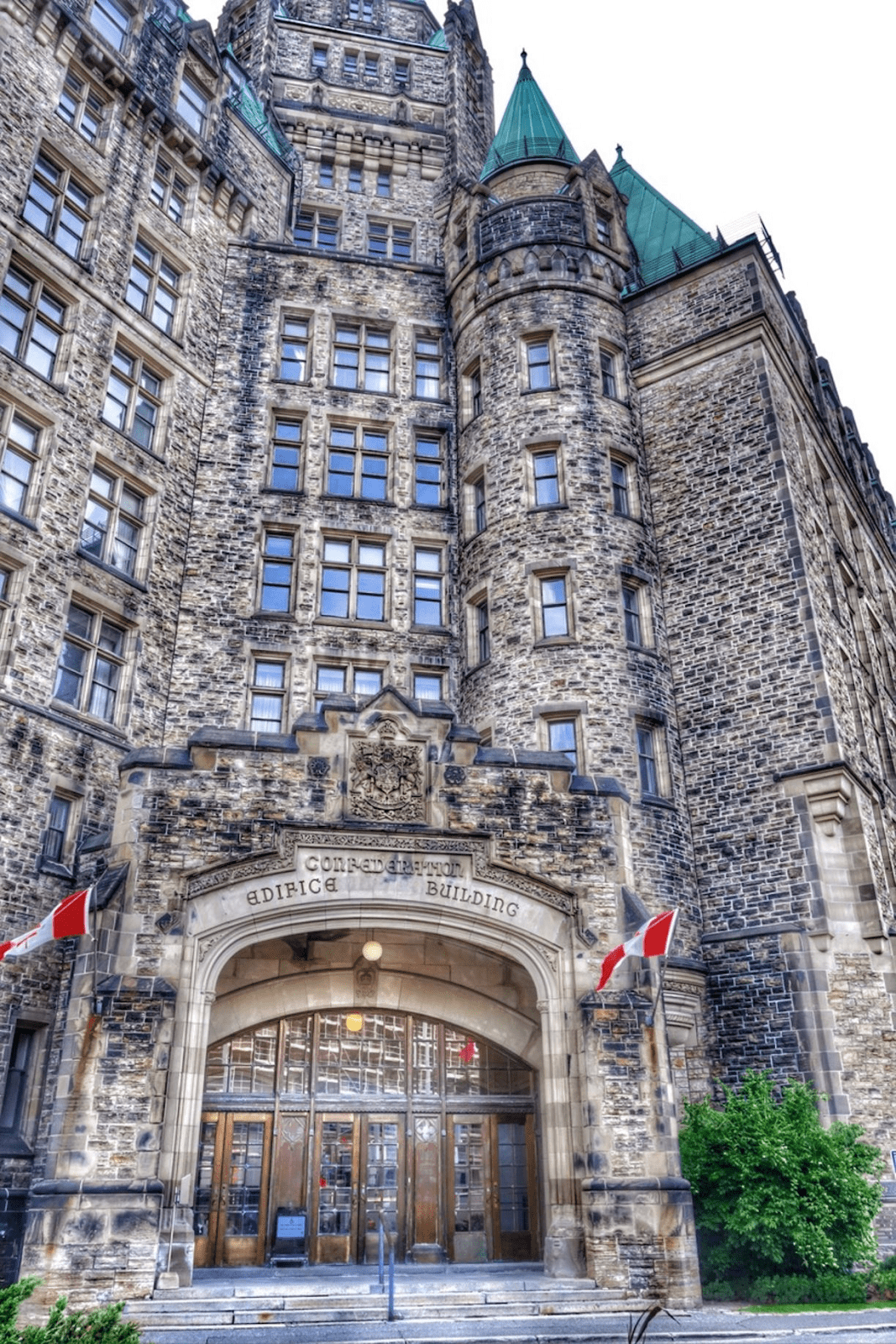
Despite its name, the Confederation Building houses government offices, primarily rented by civil servants. Initially, it was occupied by various governmental departments, most notably the Ministry of Agriculture, followed by the Department of Finance and the Treasury Board Secretariat. Today, it accommodates members of parliament, ministers, and officials from parties such as the Conservatives, Liberals, and NDP.
Distinctive Architectural Features
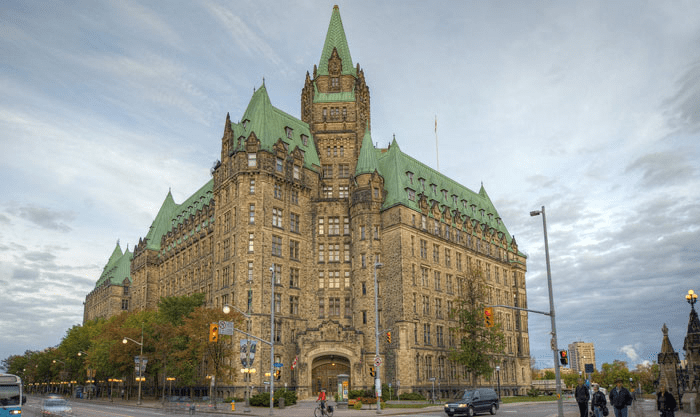
The Confederation Building’s architectural charm lies in several unique elements, including:
- A Gothic Revival façade that is more intricately designed than other government buildings.
- A mix of architectural elements like turrets, dormer windows, projecting towers, carved stone details, pavilions, and oriel windows.
- The Wellington Street-facing façade is adorned with Canadian emblems, depictions of local nature, provincial coats of arms, and Indigenous symbols.
- Interior details featuring marble, bronze, terrazzo, plaster, and brass, with a frieze of Canadian symbols decorating the walls.
Confederation Building as a Historical Heritage Site
In 1988, the Canadian government designated the Confederation Building as a heritage site. Built to extend the grandeur of Parliament Hill, the building is a significant piece of historical architecture that lends a stately atmosphere to Wellington Street. It was the first structure beyond Parliament Hill designated for government use.
The Confederation Building’s exterior has remained virtually unchanged since its construction, while interior renovations have been carefully executed to preserve its heritage.
Unique Architectural Elements
The building’s architectural heritage is evident in its distinctive eastern and southern façades, as well as in the lobby. In 1927, these façades were meticulously designed to blend with Ottawa’s Gothic architectural ensemble, particularly the nearby Parliament Hill structures. Like those on Parliament Hill, the Confederation Building features elements such as:
- Dormer windows;
- Turrets;
- Oriel windows;
- Pavilion rooftops;
- Towering projections;
- Intricate stone carvings.
Each of these elements aligns closely with the elegance of the Parliament Buildings, symbolizing national pride. Preservation efforts for these historical elements prioritize material integrity and detail fidelity.
The Wellington Street façade, in particular, is renowned for its patriotic symbolism, celebrating Canadian history and identity. Constructed with premium materials, the building underwent careful restoration efforts in the late 20th century, ensuring that high-quality materials, not substitutes, were used in preservation.
The Confederation Building’s architecture captures the spirit of Canada’s history, blending Gothic Revival elements with a sense of national pride, making it an enduring symbol of Canadian heritage.