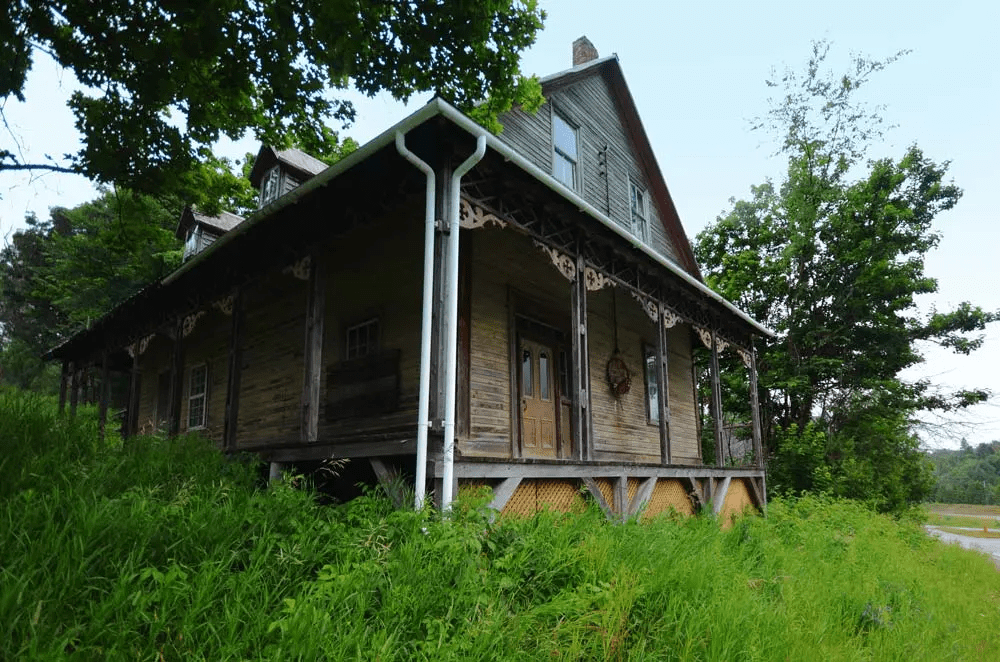

In the 21st century, there exists a truly unique place on the outskirts of Ottawa, where life has come to a complete halt. People abandoned their homes, leaving them empty for years. This area lies on the Opeongo Line, on the edge of Canada’s capital. Until the late 18th century, this area was a French colony. More details can be found on ottawa-future.com.
The Area During French Colonization
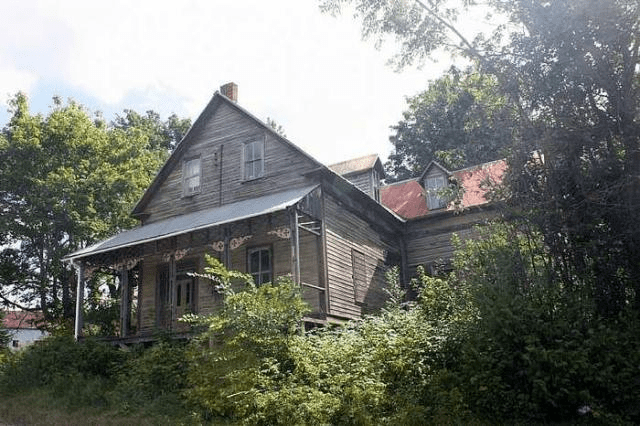
Until 1763, Ottawa’s outskirts were part of a French colony. Agreements were numerous between the Indigenous peoples residing around Ottawa and the French, outnumbering those of other colonial governments. Soon after, the colonies dissipated, but those who remained continued to live and cultivate the land. The area on Ottawa’s outskirts was mostly populated by United Empire Loyalists—Americans and former Scottish soldiers.
Why Did These Areas Become Abandoned?
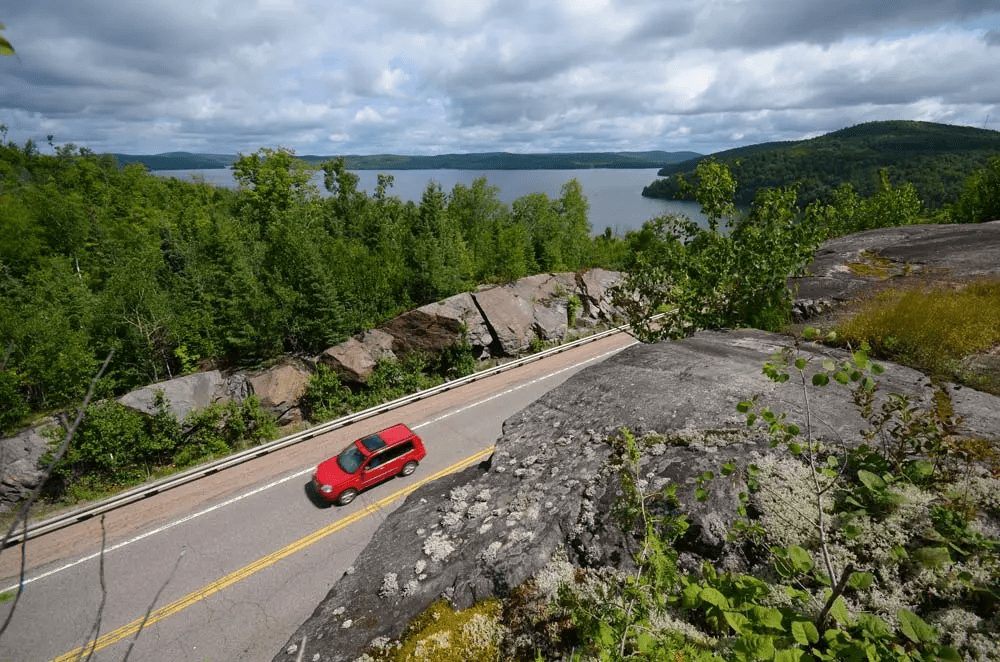
For many years, life thrived on Ottawa’s outskirts. People worked, studied, and lived full lives. However, residents soon began leaving the small settlement for several reasons:
- The land on Ottawa’s outskirts was not suitable for long-term agriculture. People could not grow food year-round due to the predominantly rocky and stony terrain;
- The railway line cut through the northern part of the settlement, bringing significant inconvenience to locals;
Entire Ghost Towns
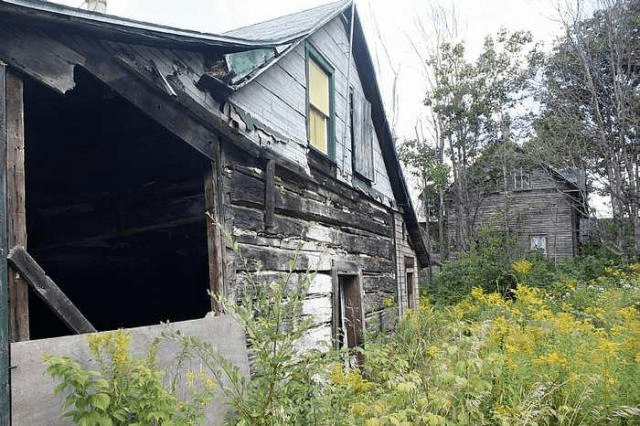
In the 21st century, many ghost towns stretch along the former French colony’s Opeongo Line. The architecture of these towns is captivating, running from east to west along the road.
The Ferguslie settlement, better known as Opeongo. In the early 19th century, the railway reached this small settlement, attracting numerous visitors. The natural beauty and nearby lake lured people in, and a hydroelectric power plant on the river nearby powered the town’s growth. However, the plant was shut down in the mid-20th century, and the town began to decline. Locals moved away in search of better opportunities.
Another small abandoned settlement on Ottawa’s outskirts is Esmond. This area once boasted some of the most fertile land in the remote part of Ottawa, allowing residents to farm. But eventually, the soil became depleted, trees withered, and residents had to leave. In the small village, a historic stone church and a few old wooden buildings still remain.
The Clontarf settlement on Ottawa’s outskirts once sat nestled between two small hills. The ghost town retains a few architectural elements; all the buildings were made of wood. The preserved farms that once operated here still stand, along with a church built in 1850.
Brudenell is yet another ghost settlement on the outskirts of Ottawa and along the Opeongo Line. In the 19th century, Brudenell was a bustling place, hosting three hotels, each with its own tavern. These taverns were often visited by lumberjacks after a hard day’s work. Brudenell also had three shops, two blacksmiths, a sawmill, a carpentry shop, a church, and a school. However, like many other settlements near Ottawa, Brudenell eventually fell into decline as people left in search of better prospects. The 19th-century wooden houses still stand, with an enchanting appearance despite their age. Remarkably, these wooden structures, now hundreds of years old, remain in excellent condition.
In the 21st century, a few tourists make their way to Ottawa’s outskirts to discover the unique 19th-century urban architecture of Ottawa’s ghost settlements.