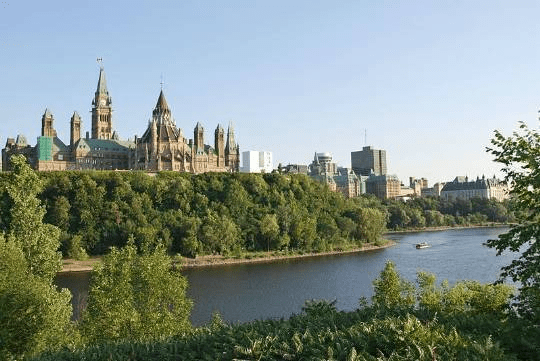

Ottawa’s famous Parliament Hill was once just a rugged cliff on the riverbank. However, when Bytown was renamed Ottawa and designated the capital of Canada, a special building for the Canadian government needed to be constructed. A unique and beautiful site was chosen on the hill by the river. Read more at ottawa-future.com.
Bytown
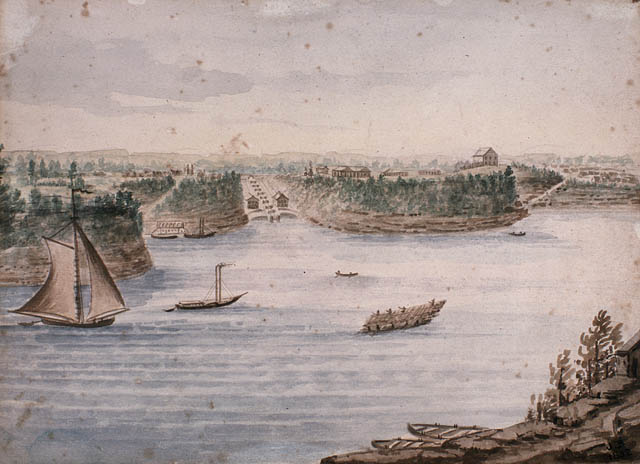
An illustration shows the hill by the river, the very one planned as Canada’s future government quarter. The settlement depicted in the illustration dates back to around 1832.
Before it became modern Ottawa, the settlement was known as Bytown, named after engineer John By, who commanded the construction of the Rideau Canal in 1826. At that time, Bytown’s population was about 2,000, mostly laborers and builders working on the canal. By 1855, the population had grown to 7,000, and the settlement was officially declared a city and renamed Ottawa. Ottawa’s and other Canadian towns’ rapid development was fueled by the fur and lumber trades. Consequently, in 1857, the decision was made to designate a capital city, and in 1858, Ottawa was selected. That same year, plans were set in motion to build a government building on the hill.
The government building was to include legislative chambers, 170 offices for officials, its own gallery and library, large reading rooms, separate rooms, and accommodations for visiting dignitaries. The total area of the parliamentary building was planned to be 10,200 square meters.
Beginning of Parliamentary Construction
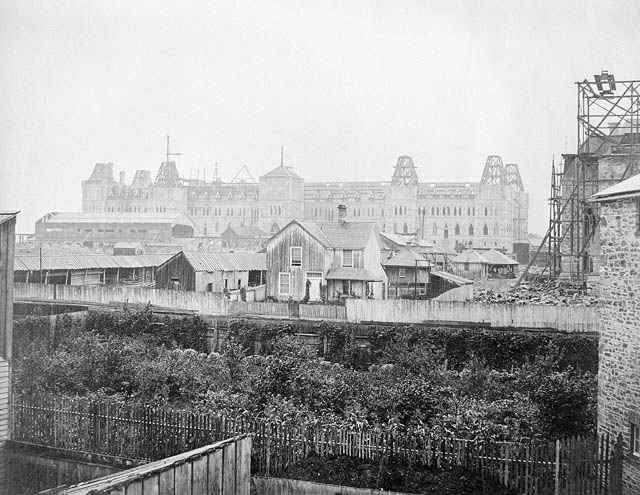
One year after Ottawa was named the capital of Canada, a contest was held for architects to design the parliamentary building. Almost 300 designs were submitted, and in 1859, the project was awarded to architects Thomas Fuller and Chilion Jones.
Construction began promptly. The building was to be a grand structure with unique architecture that would symbolize the greatness of the young country. The foundation was laid immediately in 1859, and active construction began with the arrival of warm weather in the spring of 1860. The building was constructed from ancient red sandstone and other local stone types. The roof was covered with gray and green stone. During construction, Prince Edward VII visited the site and laid a marble stone engraved with the names of the architects and officials, symbolizing prosperity for the young nation and its legislative institution.
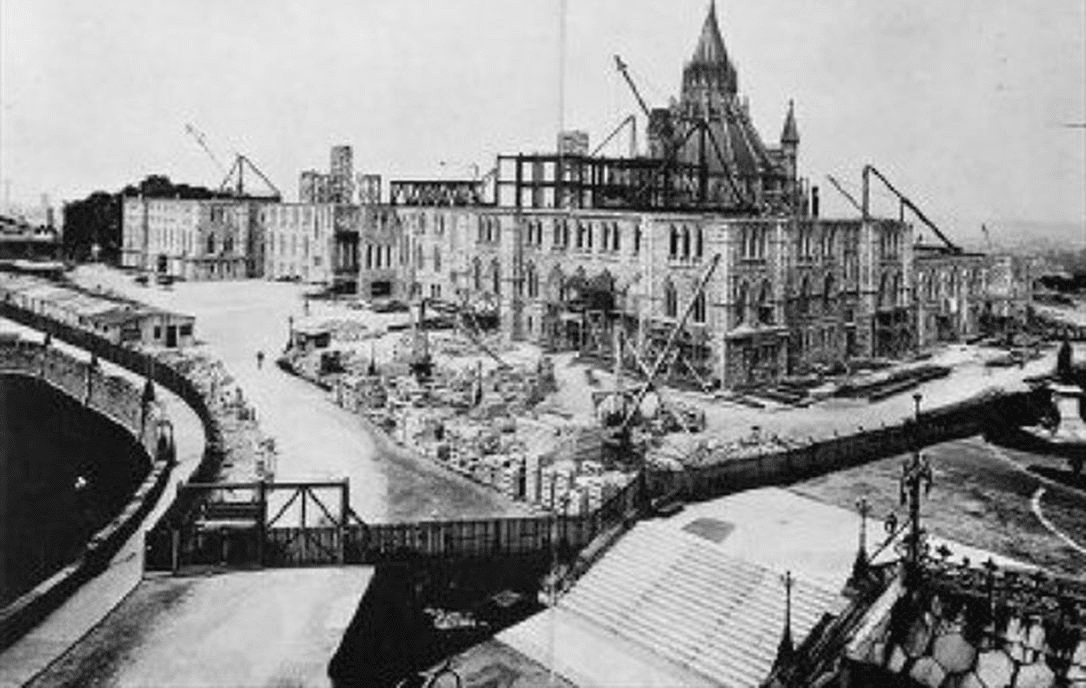
In 1861, it was discovered that the budget for the government building had been exceeded, and construction was halted. An investigation into the project’s issues began in 1862, and work resumed only in 1863.
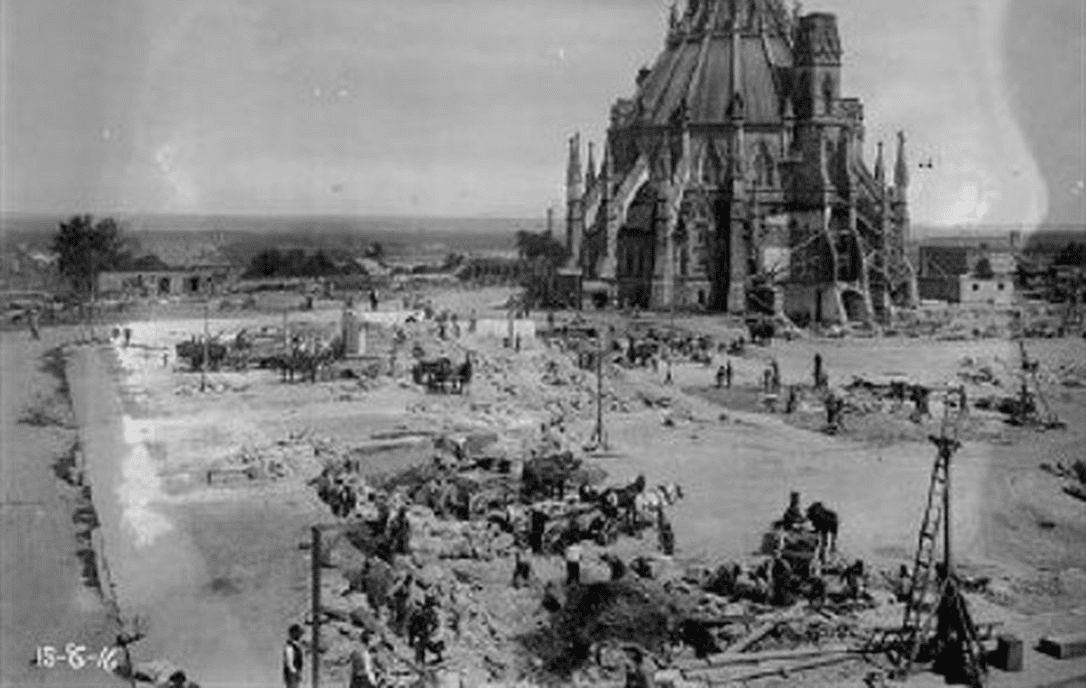
The building on the hill was intended to serve as the government seat for four provinces. For such a small representation, the building’s 10,200 square meters seemed too large. The first parliamentary session with representatives from Canada’s four provinces took place in 1867.
Four years later, representatives from nine additional provinces joined the Canadian Parliament. With this expansion, the parliamentary building no longer felt oversized.
In 1876, the government library was completed, along with the landscaping of the parliamentary grounds. Soon, grand royal gates were installed at the entrance to the government building.
Two additional territories joined the Canadian Parliament in 1905, marking the completion of this unique architectural structure about 20 years after its start.
The Devastating Fire
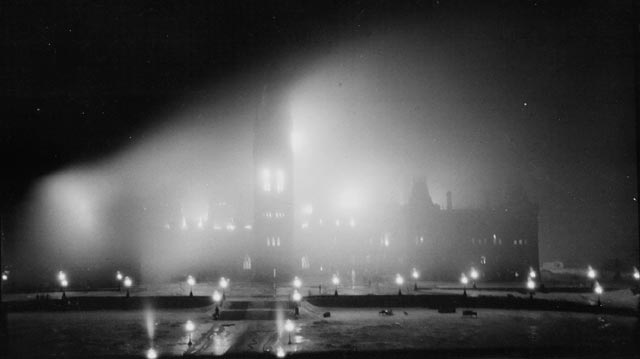
An old photo shows the central government building ablaze. The fire occurred around 9:30 p.m. on February 3, 1916, during a session of the Canadian government.
The fire quickly spread through the building, and officials crawled along the floor to escape the thick smoke and exit the burning structure.
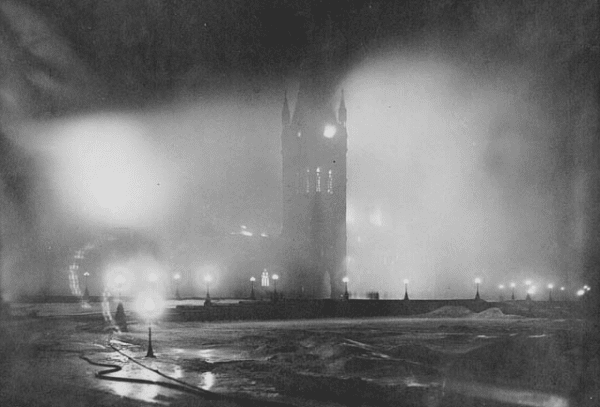
The flames engulfed the entire building, and this magnificent 19th-century structure began to collapse. The bell from the Victoria Tower fell, and strong winds that night spread the fire rapidly, causing immense damage. Ottawa firefighters worked tirelessly to contain the blaze, but sadly, the magnificent government building was destroyed.
Aftermath of the Fire
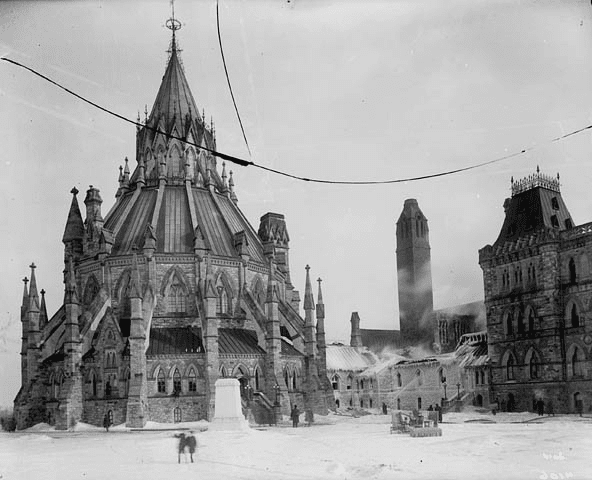
The fire claimed seven lives, and the costly government building was left in ruins. By the next day, the building was still smoldering, with only the library on Parliament Hill surviving.
The Canadian government had to find a temporary location to continue its work, while reconstruction of the hill began.
In the 21st century, a memorial museum, the Victoria Memorial Museum, was built on the hill to commemorate those who lost their lives in the fire.
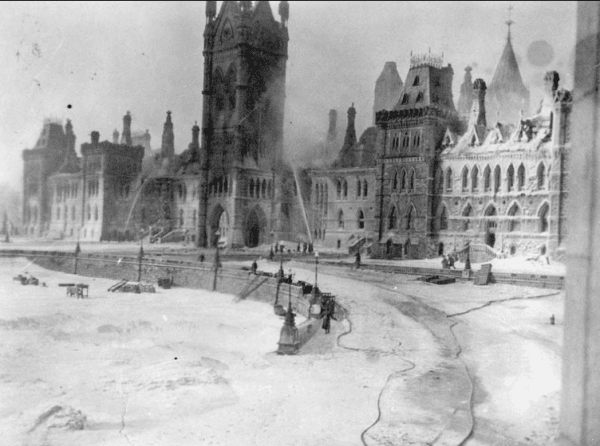
Reconstruction Period
Reconstruction of Canada’s government building began in 1916 and concluded in 1920.
During reconstruction, Prince Arthur, a representative of the royal crown, visited Ottawa to lay the same marble stone found in the ruins after the fire.
Architectural Changes
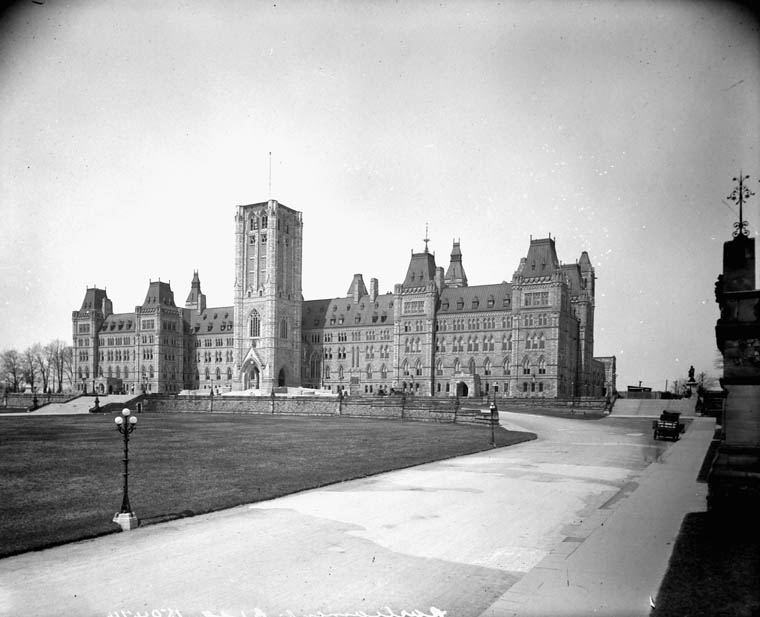
A new team of architects developed a different design for the parliamentary building. Although it resembled the original, new materials and construction methods were used. The revised building plan included an additional floor, and the structure itself was larger. To prevent a repeat of the disaster, the building’s interiors were constructed with limestone instead of wood, and the floors were made of marble. Corridors were also redesigned for greater comfort and faster outdoor access.
Due to World War I, there was a severe shortage of workers and materials, and costs were high, making construction progress slow.
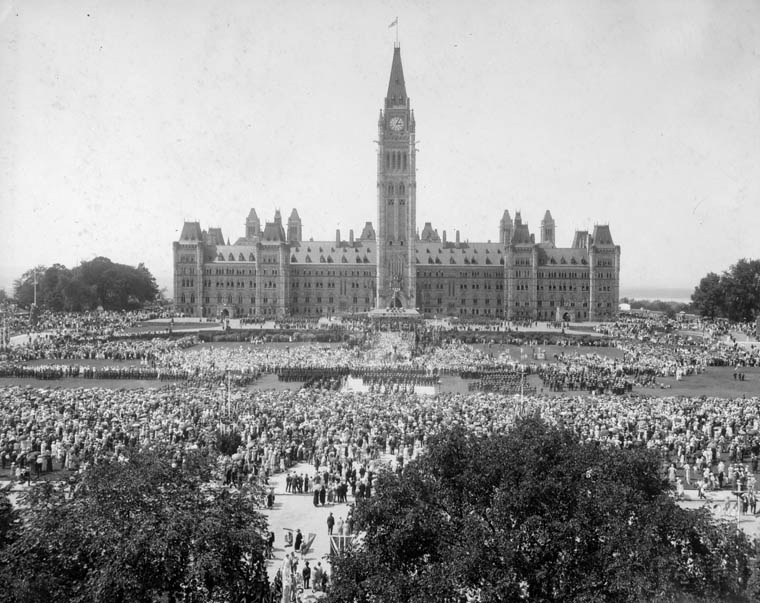
The reconstructed parliamentary building on Parliament Hill officially opened in winter 1920, becoming a significant historical symbol of the young nation of Canada and an architectural jewel of the city.
On July 1, 1927, the newly restored Peace Tower, previously the Victoria Tower with the bell, was inaugurated. The bell first rang in 1916 and was restored in 1927. On this day, plans were made to create a memorial for all fallen Canadian soldiers near the Peace Tower.
Library Fire
Another fire broke out on the hill in 1956 in the old library, which had survived the 1916 fire. The fire started due to an electrical short on the roof. The flames nearly destroyed the government library, along with all of Canada’s archival documents. Although the fire was extinguished, the library’s interior, numerous book collections, and archives were damaged by fire and water.
Following this incident, a new, more secure library was built several years later, in a location west of Parliament Hill, to reduce congestion on the hill.
Restoration of the Government Center
In 2002, a large-scale restoration project for the historic building on Parliament Hill began. The project included the complete restoration of the building’s facade. Since the 19th century, Ottawa’s government building has endured numerous trials, fires, and reconstructions, and the original structure no longer exists. What modern tourists see on Parliament Hill is an architectural recreation of the original parliamentary building.