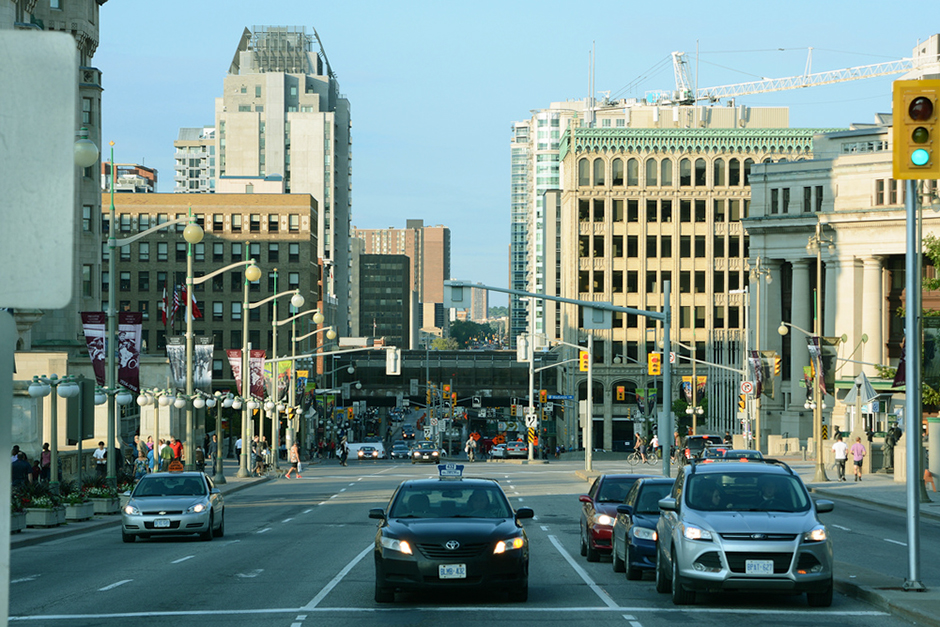

Ottawa is the capital of Canada, yet it’s far from being a “typical” capital. This central Canadian city often remains “in the shadow” of Toronto and multicultural Montreal. Some love Ottawa for its calm and balance, while others find it dull and uninteresting. One thing is certain, though – Ottawa has its own charm and unique atmosphere, largely thanks to its distinctive architecture. Let Ottawa Future introduce you to the architectural highlights of the Canadian capital.
Ottawa’s Architectural Styles — A Blend of Eras
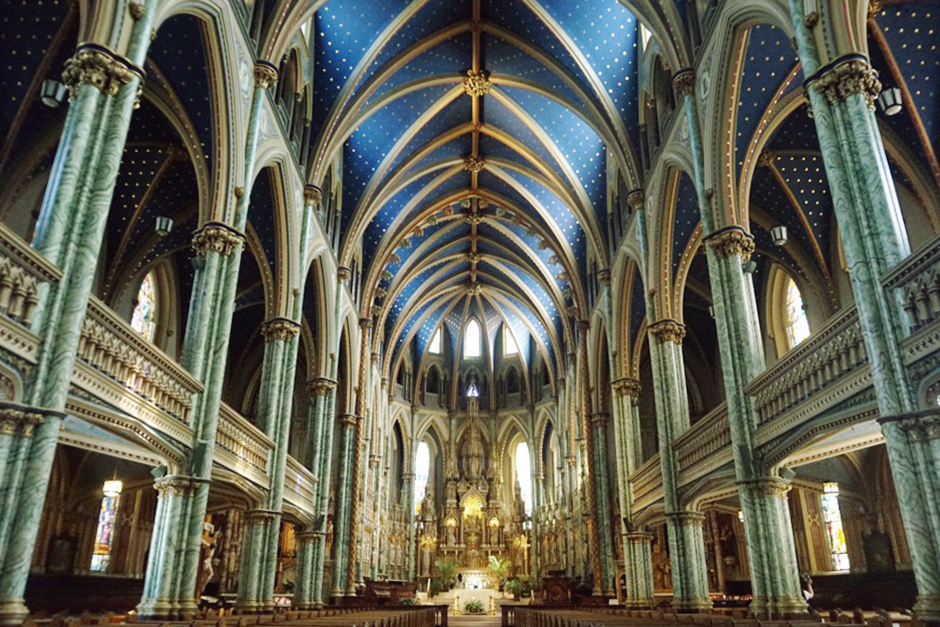
Ottawa’s architecture is a symbiotic blend, spanning from 19th-century Georgian architecture to 21st-century postmodern styles. Some architectural styles even originated in Canada, which deserves further exploration.
- “Bay-and-Gable” Style: This distinct style features large bay windows topped with a gable roof.
- Annex Style House: A popular residential style with unique features.
Classic Tourist Attractions
The main attraction in Ottawa is the Parliament Buildings, whose appearance and architecture are reminiscent of Hogwarts. A visit leaves one feeling like they’ve stepped into a royal court. Hard to imagine, yet Canadian politicians work within these architectural masterpieces.
This place is open to all who wish to experience it:
- The unique and rich library is available for viewing;
- The Senate chamber offers a rare glimpse into where officials deliberate;
- The Canadian flags surrounding the Peace Tower are accessible for close-up views.
A unique light show projected onto the main building highlights all the architectural nuances, especially visible in the evening light.
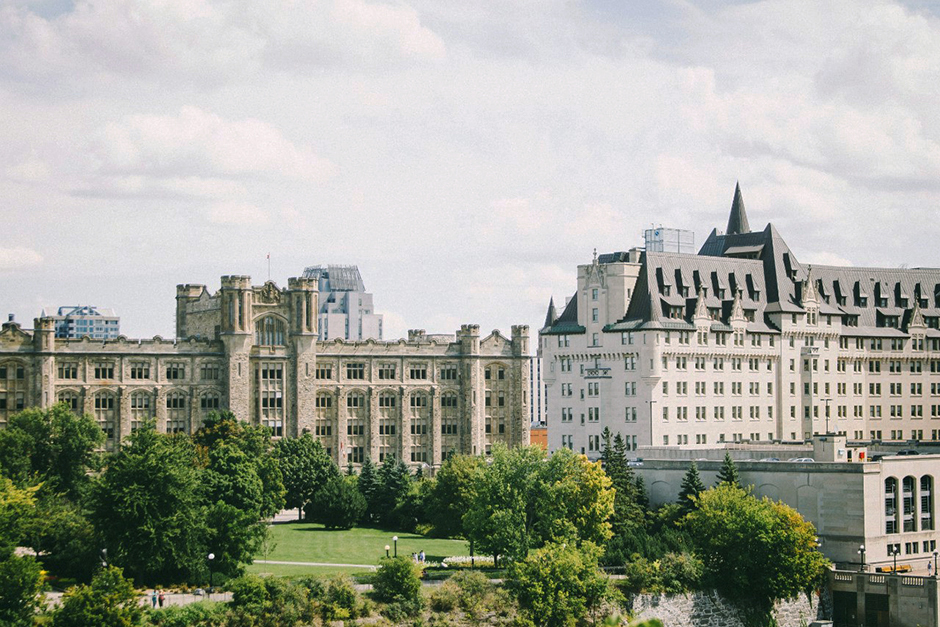
The Canadian Parliament Buildings are Ottawa’s most famous landmark, well-known to architectural critics. The complex consists of several neo-Gothic structures, exemplifying Victorian high Gothic style. The Langevin Block of the Second Empire and the Baronial Connaught Building were also built in this style.
Ottawa’s Universities
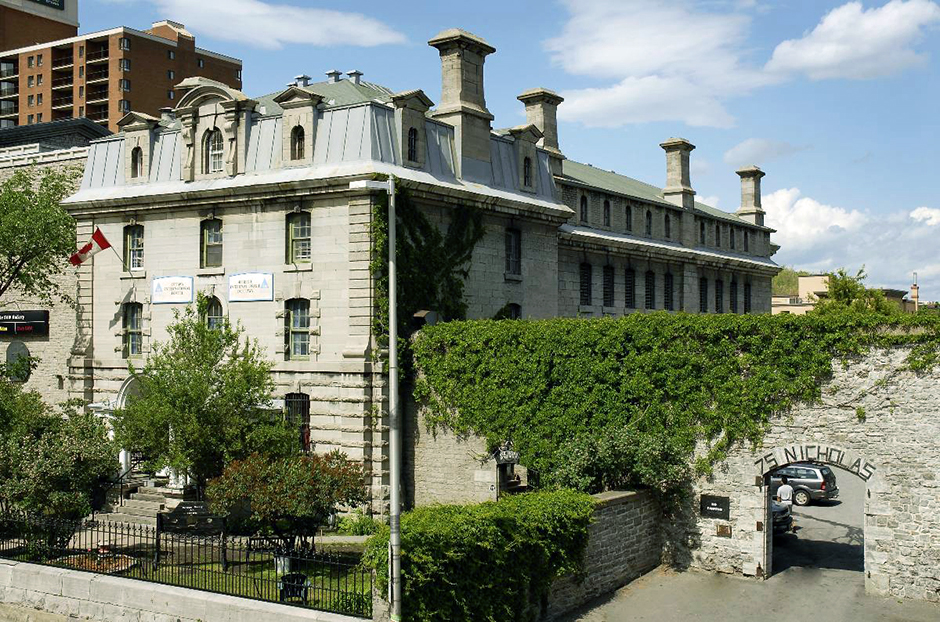
Ottawa is home to three universities: Carleton University, Saint Paul University, and the University of Ottawa. Each of these institutions reflects various architectural styles.
- University of Ottawa: Established in the 19th century, it reflects the spirit of the time. In 1905, Tabaret Hall, a neoclassical building, was constructed and is now recognized as a landmark of Ottawa. Its architecture is marked by rigidity and mass, featuring concrete-laden spaces and central libraries. More recent constructions incorporate postmodernist structures.
- Saint Paul University: Also known as the Pontifical Catholic University, it’s connected with the University of Ottawa. Its main buildings, Guigues Hall and Laframboise Hall, are built in a modern style, with extensive greenery surrounding them.
- Carleton University: Founded in 1942, Carleton is home to one of Canada’s leading architectural schools. Campus structures reflect a rejection of monumentalism, instead drawing from academic quadrangles. The campus’s tallest building is the Dunton Tower.
Interesting Facts about Ottawa’s Architecture
- Unlike capitals like Washington, D.C., or Paris, Ottawa wasn’t built based on a master plan.
- An old rule limited the height of buildings to no more than 92 metres, the height of the Peace Tower, ensuring it would never be obscured by modern structures.
- The federal government’s acceptance of modernism also influenced the city’s architectural approach. In earlier periods, government buildings were solely monumental and functional, but by the 1960s, economic efficiency became a priority in government projects.
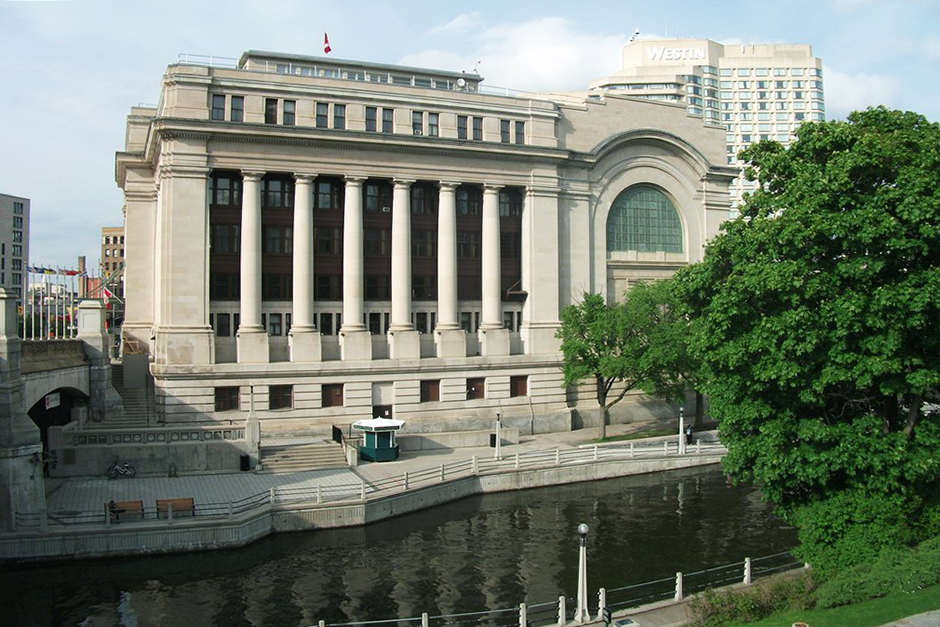
- Ottawa’s modern architecture combines functional simplicity and modernist elements. The city has three museums built within the last three decades, showcasing postmodern architecture: the new buildings of the Canadian Museum of Civilization, the National Gallery of Canada, and the Canadian War Museum.
- Ottawa’s architecture has received international recognition, with the capital serving as a showcase for world-renowned architects like Moshe Safdie, Raymond Moriyama, and Douglas Cardinal.
- Ottawa’s residential architecture is dominated by structures from the same lineage. Most buildings are finished in brick, wood, or stone.
- The older neighborhoods, such as Sandy Hill and New Edinburgh, were built between the late 19th and early 20th centuries, featuring two- and three-storey buildings in Victorian or Queen Anne styles, with minimal ornamentation.
- Suburban homes built after World War II, especially in Alta Vista and the older parts of Nepean, feature ranch-style, single-storey houses with garages and open layouts.
- Notable architects who contributed to Ottawa’s modernist interior architecture in the early 1960s include Walter Schreier, Brian Barkham, James W. Strutt, Paul Schoeler, and Matt Stankiewicz.
- Ottawa’s architectural heritage is also marked by mansions and buildings erected by lumber barons, who made up much of the city’s early economic elite, such as John Rudolphus Booth and others.
Modern Architecture in Ottawa
From the 1960s onward, the city saw the construction of its first high-rise buildings. A notable example from that era is Julian Tower on Bronson Street, where the buildings were typically designed with concrete or brick façades.
Modern Ottawa is characterized by residential neighborhoods arranged in a grid, rich in greenery, with predominantly two- and three-storey buildings. The city is calm and welcoming, with refined cottages, government buildings, and abundant green spaces, all of which continue to attract tourists and delight residents.