

This industry has deep historical roots, as local stone was widely used in the construction of Ottawa’s buildings. With the development of new building technologies and materials, the stonecraft trade experienced a decline. Ottawa Future shares more about its revival and the company specializing in it.
The Origins of Stonecraft in Ottawa
The story begins in 1860 when stone carvers, masons, and traders launched a construction project in Ottawa, as reported by the Ottawa Citizen on April 17, 1860.
This project was the construction of Canada’s most iconic building on Parliament Hill. Workers transported vast quantities of stone, primarily Nepean sandstone, sourced from nearby quarries, by horse-drawn cart.
One notable stonemason up until the mid-1900s was Canada’s second Prime Minister, Alexander Mackenzie. Born in Scotland, Mackenzie was the third of ten children. At thirteen, following his father’s death, he began working full-time and trained as a stonemason. In 1842, he immigrated to Canada with his family, working as a master mason and contractor on construction sites in Kingston and Montreal.
As he built homes and public buildings, the future politician (elected in March 1873) remained in high demand. In Sarnia, for example, he worked on the old courthouse, jail, the original Anglican church, and a house he built for his brother John on Christina Street.
Returning to Ottawa’s stonecraft industry, after Parliament Hill construction, changes came. Wars, economic depressions, and technological advancements led to the departure of young masons for WWI, with many not returning. Those who survived saw a decline in demand for their trade as construction shifted to concrete and brick.
Despite some repairs, stone structures began to deteriorate.
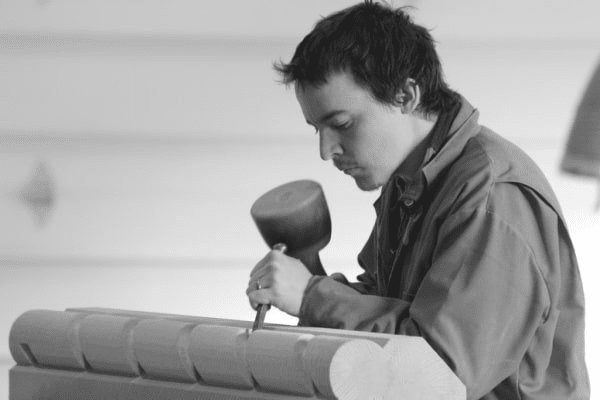
Reasons for the Craft’s Revival
In recent years, there has been a notable rise in interest in natural stone and traditional stonecraft techniques due to the following factors:
- Durability: Stone buildings can endure for centuries, retaining their beauty and strength.
- Environmental sustainability: Using eco-friendly materials aligns with modern sustainable development trends.
- Uniqueness: Each stone is distinct in pattern and texture.
- Aesthetic appeal: Stone offers charm and elegance, celebrating history and tradition.
Smith and Barber Stone Masons in Ottawa
Professional stone carving is a time-honored craft of significant value today, embodying durability alongside the timeless quality of stoneworks.
Integrity Masonry Inc. has established long-term collaborations with Ottawa’s Smith and Barber, providing professional stone and brick masonry services to residential and commercial clients in Ottawa. This collaboration brings unique, handcrafted stonework to the heart of their projects.
A key to the company’s success is its stringent selection criteria for masons, emphasizing experience, education, and professional certifications.
Notably, the company is accredited by the Better Business Bureau and won the 2013 Ottawa Better Business Bureau Torch Award for Marketplace Trust in the “Home Improvement” category.
The company is insured, holds an excellent safety record with the Workplace Safety and Insurance Board, and has a stellar reputation, further solidifying Integrity Masonry Inc. as a leader in the field.
About the Stone Masons
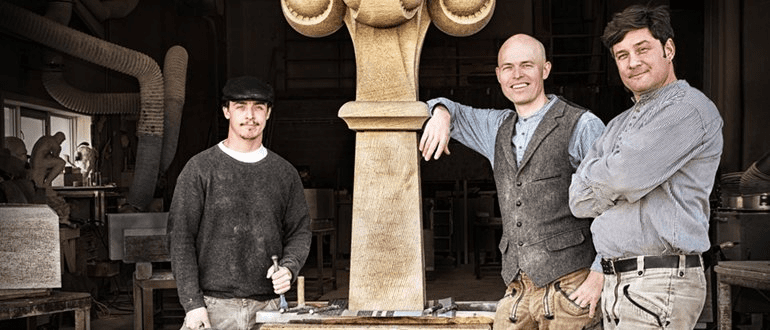
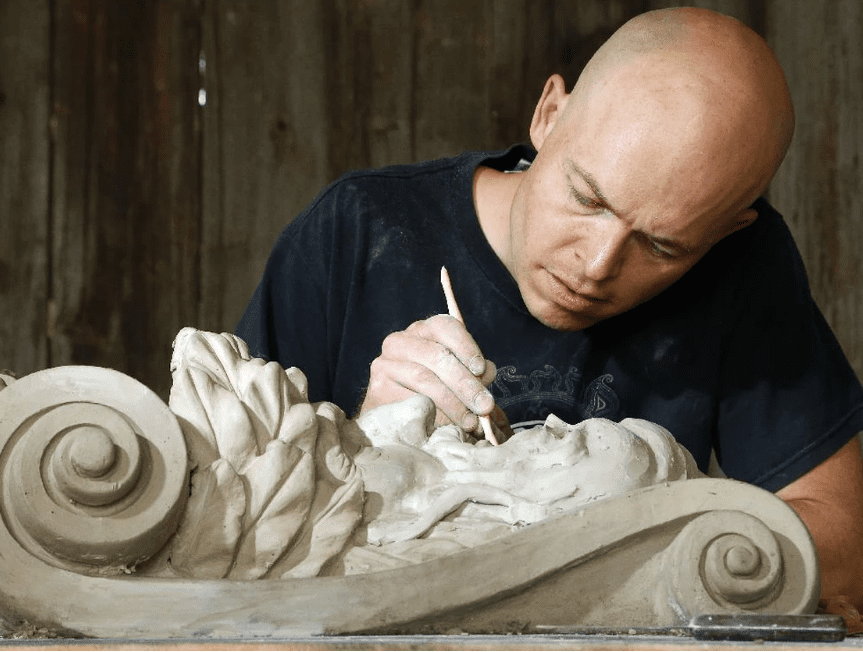
John-Philippe Smith and Danny Barber are skilled stone masons and carvers, recreating intricate stone carvings. Their headquarters, Smith and Barber Sculpture and Atelier Inc., is in Ottawa’s east end. In a district filled with warehouses and workshops, they carve arches from stone blocks and repair decorative carvings, with the skill to restore delicate architectural details by hand.
Their team handles everything from architectural detailing to entire restorations. Stone carvers work not only on repairs but also on cleaning, replacing, and reconstructing building components. Most of this intricate work is done by hand, requiring substantial time and effort.
John-Philippe Smith began his career at age 26. Previously, he worked in a small office in downtown Toronto, with experience in hotel sales and a dream of working with his hands. He eventually discovered the Algonquin stonemason program, launching his career with additional training in France.
Danny Barber, six years older than Smith, worked in the family business creating monuments in St. Catharines until he was 32. Seeking a more creative field, Barber pursued a course in architectural stone carving in England, later spending three years working in Gloucestershire.
Their paths crossed when they worked together on the West Block restoration project. Barber hired Smith as a subcontractor on Parliament Hill.
The two are indeed skilled stone carvers with a deep understanding of this ancient craft, having trained partly in Europe, where stonecraft is still practiced and held in high regard.
The West Block Restoration Project
Symbolically, after so many years, masons and stone carvers have returned to Parliament Hill to work on the West Block restoration. According to Public Services and Procurement Canada, this was one of the most complex 2014 projects on Parliament Hill, involving the complete dismantling and reconstruction of the Laurier Tower, with plans to finish by 2015.
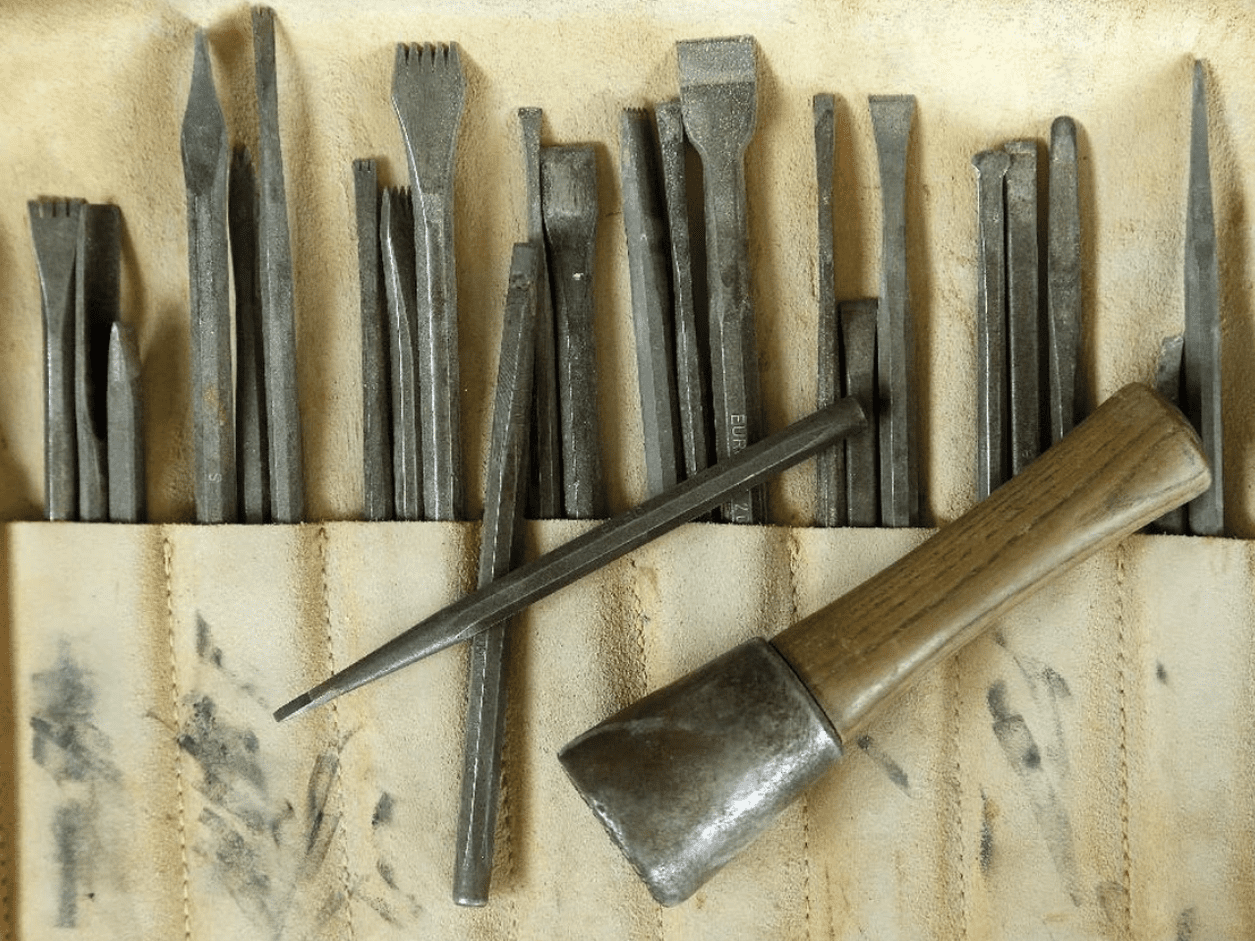
The restoration utilized traditional tools like those first used on the project, including the Crandall hammer, which was essential in creating the building’s exterior surface.
The restoration project cost was estimated at $863 million, while the total reconstruction of Parliament Hill was around $5 billion, involving 5,000 people, a small number of whom were masons.
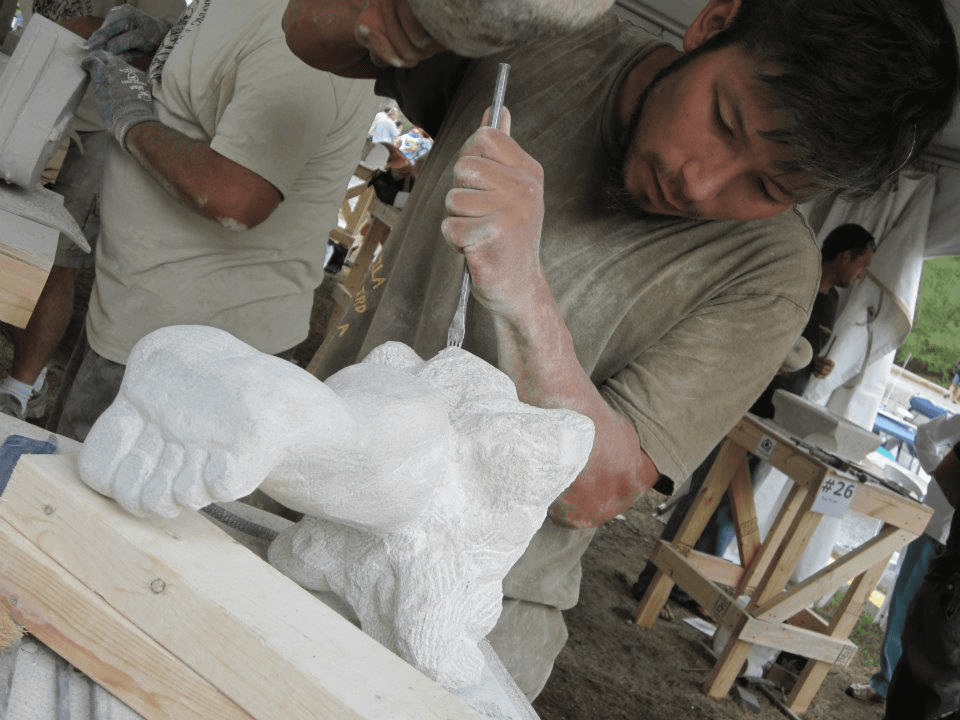
Ottawa’s Stone Carving Festival
To learn more about this craft, visit the Ottawa Stone Carving Festival, held on Wellington and O’Connor Streets across from Parliament Hill on August 23-24. The festival, first organized in Ottawa in 2014 by John-Philippe Smith and Danny Barber, allows people to glimpse the craftsmanship behind the scaffolding.
This event has since become an annual tradition, where visitors meet professional carvers, artisans, and enthusiasts. They share a passion for the craft, creating unique works of art using traditional tools and methods. In 2024, the three-day event took place on July 19-21 in Quebec.