

Anyone interested in learning about Canada’s fascinating aviation and space exploration history can discover an impressive collection at one of the world’s best museums, located in Ottawa. With over 130 civilian and military aircraft, propellers, engines, and other artifacts, Ottawa Future delves into the museum’s history and highlights its most captivating exhibits.
The Beginning: How It All Started
The Canada Aviation and Space Museum first opened its doors in 1960 at Uplands Airport in Ottawa. At the time, it was home to one of Canada’s three major aeronautical collections. By 1964, these collections were merged into the National Aeronautical Collection and moved into World War II-era hangars at the historic Rockcliffe Airport in Ottawa. As its popularity grew, visitors gained a deeper understanding of the development and use of aircraft in Canada.
In 1967, the museum was merged with the National Museum of Science and Technology, and by 1982, the continuously growing collection of military and civilian aircraft was renamed the National Aviation Museum.
In 1990, the National Museum of Science and Technology was registered, and in 2000, it was officially recognized as the Canada Aviation Museum. After 2010, the institution expanded its scope to include aerospace technology, becoming the Canada Aviation and Space Museum.
The Reserve Hangar
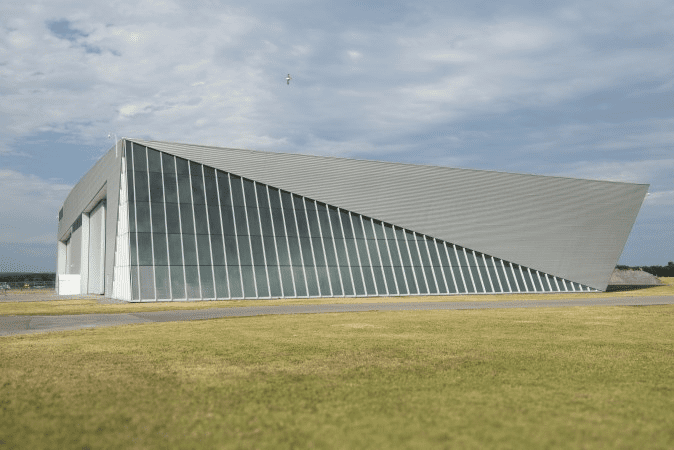
In 2005, the museum’s building was enhanced with the addition of the Reserve Hangar, which was created to better preserve and showcase Canada’s aviation heritage. In 2001, the museum received funding from the Canadian government, allowing for the development of a long-term complex plan. The Reserve Hangar, a blend of elegance and aviation strength, quickly became a symbol of flight.
The metal shell combined with a glass facade is designed to:
- Better display the collection,
- Provide orientation for museum visitors,
- Create the atmosphere of a working airport.
The Reserve Hangar houses many artifacts worth seeing, with storage facilities covering 8,200 square meters.
How to See the Highlights
The history of flight and space exploration can be explored online through free demonstrations. The museum also offers guided tours that are highly recommended for a deeper experience. Some key highlights include:
- The largest preserved section of the famous Avro Arrow aircraft,
- The original Canadarm, used on the Endeavor space shuttle,
- A World War II Lancaster bomber,
- An impressive Engine Alley,
- A replica of the Silver Dart, crafted in 1958 by volunteers of the Royal Canadian Air Force,
- The “Canada in Space” exhibit,
- The “Living in Orbit: The International Space Station” exhibit.
The museum’s history is captivating, as are its exhibits, showcasing the development of aircraft during both peacetime and wartime. The inclusion of international models has helped establish a strong international reputation.
Depending on the season, residents and visitors to Canada’s capital can experience Ottawa from above, taking helicopter flights or flights on a historic biplane or Cessna (available year-round) from the museum grounds.
Visitors also have the opportunity to witness pilot training on highly realistic flight simulators.
Virtual Tour
Explore the museum’s permanent exhibits in more detail:
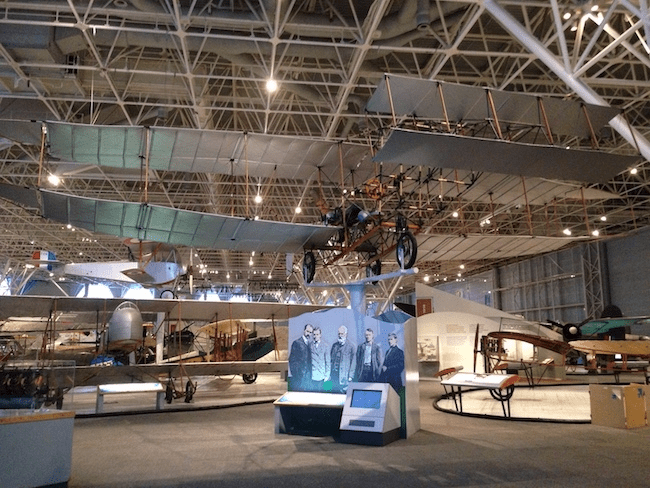
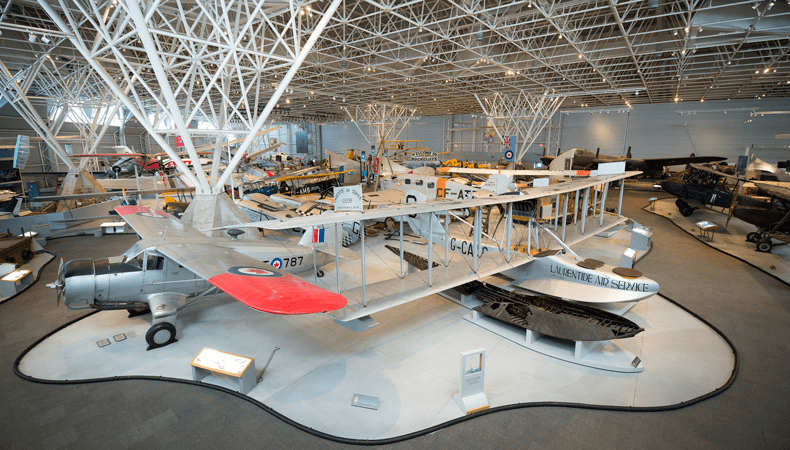
- The Main Exhibition Hall: This area introduces visitors to aviation history from its earliest days to the jet age.
- Engines: The Power of Flight: Featuring a vast selection of engines.
- Living in Orbit: An exhibit on daily life aboard the technological marvel that is the International Space Station.
- Health in Space: Boldly Exploring: This exhibit features astronaut testimonials and fascinating artifacts, showcasing Canada’s contributions to health science.
- Canada in Space: A showcase of Canada’s achievements in space, including satellites and robotics.
- Looking to the Sky: Air Traffic Control in Canada: An exhibit highlighting the systems and technologies that ensure airspace safety.
Self-Guided Audio Tour of Ottawa
For those interested in Ottawa’s museums and landmarks, a six-day self-guided audio tour is available. This allows for exploration at one’s own pace, visiting attractions and museums when convenient. The audio tour is available in multiple languages for added convenience.
The tour begins with the history, myths, and architecture of Ottawa’s railway station. The final stop, location 12, is the Canada Aviation and Space Museum.
Nearby are other noteworthy sites worth a visit:
- Rideau Hall: The official residence of Canada’s Governor General, known for its well-maintained grounds and peaceful green space. Entrance is free.
- ByWard Market: A historic market with kiosks, cafes, and meeting spaces dating back to 1849. Culinary and wine tours of Ottawa often include a stop at ByWard Market.
- The Royal Canadian Mint: A building resembling a castle, where currency is no longer produced but special collectible coins and bullion are crafted.
Interesting Facts
- The museum is operated by the Canada Science and Technology Museum.
- From 2009-2010, the museum underwent a major expansion, adding 2,600 square meters, including a new lobby, dining area, conference rooms, and classrooms.
- The museum is located on a former military airbase.
- One of the museum’s initiatives includes a series of documentary films titled Echoes, created by Canadian film students in collaboration with the Canada Aviation and Space Museum. These films present World War II events through the lens of aviation, capturing compelling stories of Canadian veterans. The films connect generations, allowing viewers to hear directly from men and women who served in the Royal Canadian Air Force.
Museum’s Mission and Objectives
The museum’s mission emphasizes:
- Highlighting the value and importance of Canada’s aviation heritage,
- Aviation’s role in Canada’s growth and prosperity,
- The impact of aviation on Canadians’ lives,
- Fostering understanding and appreciation of Canada’s aeronautical and aerospace legacy.
Directions and Ticket Information
The drive from Parliament Hill to the museum takes about 18-20 minutes. Walking takes approximately 1 hour and 30 minutes, while public transit takes about 40-45 minutes.
The majority of the museum is wheelchair-accessible, and to view the entire collection, visitors are encouraged to visit the second floor.
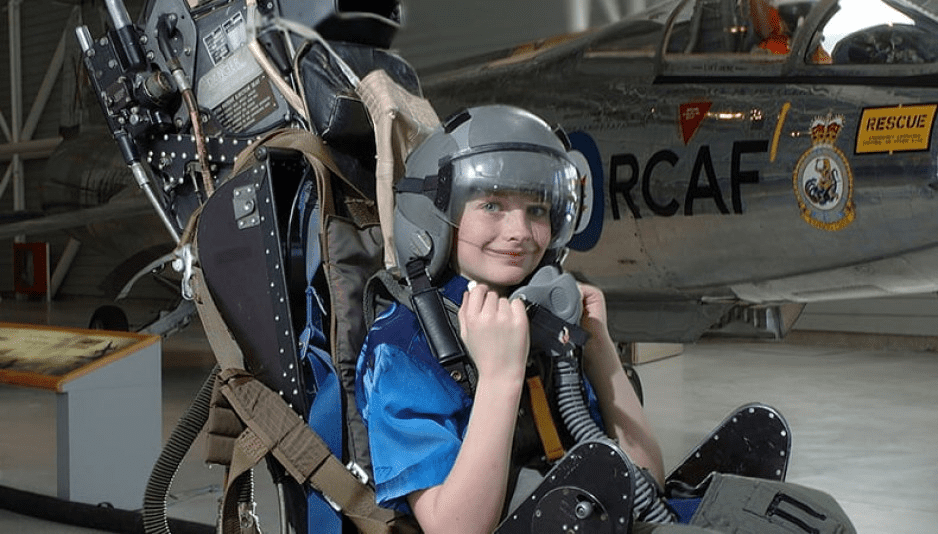
The Canada Aviation and Space Museum can be explored independently at a comfortable pace or with a guide. Tours, lasting about 30-45 minutes, are held several times a day. On Saturdays, special children’s tours are available, making it a great family outing.
For an additional fee, visitors can explore the Reserve Hangar, which houses the museum’s expanding collection.
The museum operates Thursday to Monday (9:00 a.m. to 5:00 p.m.), with free admission from 4:00 p.m. to 5:00 p.m. each day. For paid or free visits, it’s recommended to reserve a time slot in advance. Tickets can also be purchased on-site on a first-come, first-served basis.
A short video introduction provides a glimpse into the museum’s fascinating history. Aviation enthusiasts and thrill-seekers will surely appreciate the museum’s offerings.